
I'm Helen Limon. I teach European Studies at The Hague University of Applied Sciences, and I write Dragon Training, a Substack on how creative writing and children's books shape the way we think — and how we work with ai. I've published children's fiction and I'm working on a crime novel set in Amsterdam. My teaching and writing both come back to one question: how stories help us read across difference.
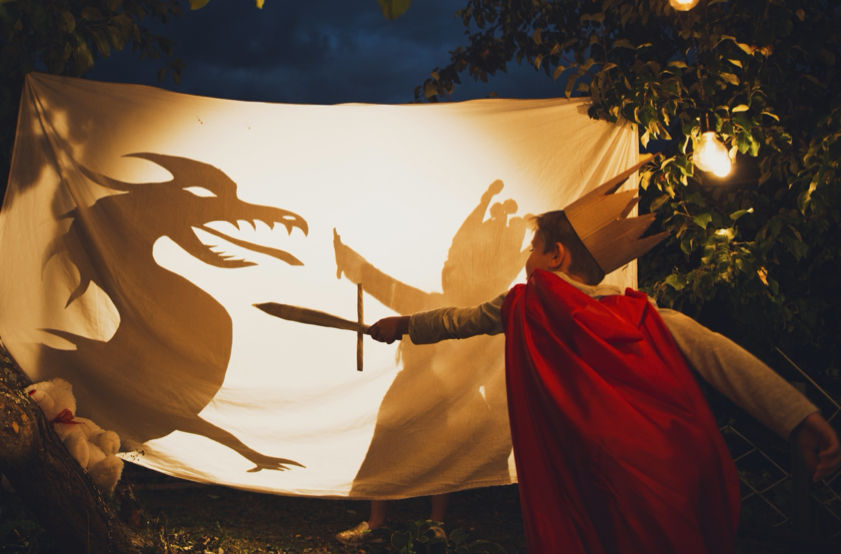
Part 1: What children’s literature can teach us about working with ai
How to train your (AI) dragon
I’ve been thinking about dragons lately. Not the metaphorical kind that live in corporate strategy presentations, but actual fictional dragons—the scaled, fire-breathing, occasionally negotiable creatures that populate children’s literature. Specifically, I’ve been thinking about a scrawny Viking boy named Hiccup Horrendous Haddock the Third and his small, stubborn dragon Toothless, because it turns out that a 2003 children’s book has something urgent to teach us about working with ai in 2026.
Here’s the thing about Hiccup: he’s terrible at being a Viking. He’s small, he’s bookish, and he absolutely cannot make dragons obey through the traditional Viking method, which is, according to Cressida Cowell’s wonderfully absurd books, to YELL AT THEM. So when every other Viking boy is commanding their dragons through sheer volume and intimidation, Hiccup has to figure out something else entirely.
Faced with a dragon who won’t respond to shouting, Hiccup does what any desperate problem-solver does: he makes a list. In his notebook, he methodically works through possible approaches to dragon motivation.
What I love about this scene is its systematic honesty. Hiccup doesn’t just try one thing and succeed. He experiments. He rules out approaches that might work but violate his values (fear works, but he won’t torture). He considers consequences (greed creates new problems). And he ends up discovering that his dragon—this particular dragon—responds not to commands or bribes, but to wordplay. To jokes and riddles.
The negotiation that follows is equally instructive. There’s agency here, preference, negotiation. The dragon isn’t being controlled—he’s being engaged with as an entity with his own rules and process.
Later in the book, Hiccup faces a much larger, more dangerous dragon called the Green Death, who is planning to eat him. The Green Death offers one chance: present a problem, and if it’s interesting enough, he might help before he eats you.
The catch? The dragon has heard it all before:
“Your Why-Can’t-I-Be-More-Like-My-Father? problem. Your It’s-Hard-to-Be-a-Hero problem. Your Snotlout-Would-Make-a-Better-Chief-Than-Me problem.”
This scene says something crucial about communication with powerful entities: generic gets generic. The Green Death already has taxonomies. He recognizes problem types. If you come with a standard, vague request, you’ll get a standard response (or get eaten). You must frame your specific problem clearly—not “I have leadership issues” but “here is my particular situation with its particular constraints.”
The struggle to communicate across profound difference isn’t new, it’s an enduring human question. How do we understand and be understood by entities that don’t think like us, don’t want what we want, might, in many ways, be more powerful than us?
Children’s literature engages with this more explicitly than most forms, perhaps because childhood itself is about learning to communicate across power differentials and profound differences in experience. The pattern appears again and again in successful contemporary books.
In Chloe Daykin’s Fish Boy (2017), Billy must communicate with a magical talking mackerel: a creature with an entirely different perspective on the world. In Rebecca Orwin’s The Monsters at the End of the World (2026), young Sunny discovers that the sea creatures everyone fears as violent monsters are intelligent and gentle.
These two brilliant writers are both ex-students of the Newcastle University Masters program and I had the privilege of teaching them. The fact that they so successfully centered narratives on human-nonhuman communication is, I suggest, because creative writing training develops exactly this capacity: to observe precisely, to imagine across difference, to show how communication works (and fails) rather than just telling.
In Chloe Daykin’s Fish Boy (2017), Billy must communicate with a magical talking mackerel: a creature with an entirely different perspective on the world. In Rebecca Orwin’s The Monsters at the End of the World (2026), young Sunny discovers that the sea creatures everyone fears as violent monsters are intelligent and gentle.
These two brilliant writers are both ex-students of the Newcastle University Masters program and I had the privilege of teaching them. The fact that they so successfullly centered narratives on human-nonhuman communication is, I suggest, because creative writing training develops exactly this capacity: to observe precisely, to imagine across difference, to show how communication works (and fails) rather than just telling.
What Hiccup, Billy, and Sunny share is: they’re all physically small, relatively powerless, facing entities that others fear or misunderstand. They can’t command through force. They must observe, imagine, experiment, and ultimately discover that the powerful entity has its own intelligence, its own way of being in the world that must be understood rather than overridden.
The parallels to working with ai aren’t metaphorical—they’re structural. Like Hiccup with Toothless, you can’t just yell louder (write a more demanding prompt). Like the Green Death scene, the ai already has taxonomies and will respond generically to generic requests. Like Sunny discovering that the real monsters might be human, we need to question our assumptions about where the real challenges lie.
The most successful ai users experiment systematically rather than giving up after one approach fails. They frame problems specifically rather than making vague requests. They observe what actually works rather than what should theoretically work. They recognize that different entities respond to different approaches—jokes work for Toothless, clear problem-framing for the Green Death.
These aren’t technical skills. They’re observational, imaginative, and communicative capacities—exactly what creative writing training develops.
Children’s books teach what they teach not through instruction but through showing the negotiation, the failure, the experimentation, the surprise of what finally works. They make visible the usually invisible work of learning to communicate. They take seriously the question that adults often forget to ask: how does this entity think, and what does that mean for me?
The three book I looked at this time don’t resolve these questions easily. Hiccup doesn’t master dragon training by page 50—he’s still figuring it out by the end of the series. Billy doesn’t simply befriend the fish and move on. Sunny’s discoveries complicate everything about how her town survives. These are books that sit with complexity, that show communication as ongoing work, that refuse to offer simple answers.
Which is exactly what we need now, as we figure out how to work with powerful entities that don’t think like us, that have their own patterns and preferences.
Get in Touch
I’d love to hear from you!